
 By Olivia Wilson Media Team
Water leaks hiding within walls, beneath floors, or underground outside your home can cause thousands of dollars in damage before you even realize there’s a problem. Unlike obvious dripping faucets or visible pipe bursts, hidden leaks operate silently for weeks or months, gradually destroying building materials, encouraging mold growth, and inflating water bills while you remain completely unaware. Understanding the signs you have a hidden water leak empowers homeowners across the USA, UK, and Canada to detect problems early when repairs cost hundreds rather than thousands of dollars and before structural damage becomes extensive.
The challenge with concealed water leaks lies in their invisible nature during early stages when intervention would be simplest and least expensive. By the time water stains appear on ceilings or walls buckle from moisture damage, the leak has typically existed for considerable time and affected large areas. However, hidden leaks produce subtle warning signs long before catastrophic damage occurs if you know what to watch for. This comprehensive guide explores the indicators that suggest water is escaping somewhere in your plumbing system, teaching you detective skills that protect your home and wallet from one of the most common and expensive household problems.
One of the earliest and most reliable signs you have a hidden water leak appears in your monthly water bill rather than anywhere in your physical home. If your water consumption suddenly increases without corresponding changes in household size, habits, or seasonal watering needs, you’re likely losing water somewhere between the meter and your fixtures. A toilet leak can waste two hundred gallons daily, while even small pipe leaks add up to thousands of wasted gallons monthly, all reflected in higher bills.
To identify leak-related billing increases, compare several months of water bills looking for sudden jumps that don’t match your usage patterns. A family of four typically uses about twelve thousand gallons monthly, so usage exceeding this by twenty percent or more without explanation warrants investigation. Seasonal variations complicate analysis, as summer irrigation and pool filling legitimately increase consumption, but winter bills should remain relatively consistent year over year. Many water utilities now offer online account access showing daily or weekly consumption patterns, allowing you to spot unusual usage spikes that might indicate a new leak. Some advanced meters even alert you to continuous flow suggesting water runs constantly somewhere in your system. If your bill increases significantly and you cannot identify obvious causes like guests, new appliances, or changed routines, assume a leak exists somewhere and begin systematic investigation before the problem worsens and costs escalate further.
Hearing water running, dripping, or flowing when all fixtures and appliances are turned off represents one of the clearest signs you have a hidden water leak somewhere in your plumbing system. These phantom water sounds often become most noticeable during quiet nighttime hours when ambient noise doesn’t mask the subtle sounds of water moving through pipes or dripping behind walls. The challenge lies in locating the source, as water sounds travel through pipes and building materials, making the noise seem to originate from different locations than the actual leak.
To investigate mysterious water sounds, ensure all household members know not to use water during your test period, then turn off all faucets, appliances, and fixtures including ice makers, sprinkler systems, and any automatic water-using devices. Walk through your home listening carefully near walls, floors, and ceilings, paying particular attention to areas near bathrooms, kitchens, water heaters, and main plumbing runs. The sound of running water without any fixture operating confirms water is escaping somewhere. Hissing sounds often indicate pressure-related leaks in supply lines, while dripping or flowing sounds suggest drainage issues or significant supply leaks. Use a screwdriver or similar tool as a makeshift stethoscope by placing the handle against walls and the metal end against your ear, amplifying sounds traveling through walls and helping you locate leak sources more precisely. If you hear water sounds but cannot locate the source, calling a plumber with electronic leak detection equipment prevents the leak from causing extensive damage while you search unsuccessfully.
Persistent musty smells and mold appearing in areas without obvious moisture sources rank among the most concerning signs you have a hidden water leak creating conditions for biological growth. Mold requires moisture to thrive, so its presence in locations away from bathrooms, kitchens, or other typical wet areas indicates water is coming from somewhere it shouldn’t. The distinctive earthy, musty odor of mold often alerts you to problems before visible growth appears, particularly in enclosed spaces like closets, cabinets, or behind furniture where air circulation is limited.
Pay particular attention to mold or mildew on walls that don’t border bathrooms or kitchens, as these locations suggest water is leaking from pipes within walls or from roof leaks above. Basement and crawl space mold can indicate foundation leaks, groundwater intrusion, or leaking pipes in floors above. Closets sharing walls with bathrooms frequently develop mold from toilet supply line leaks or shower pan failures that allow water to seep through walls. The health implications of mold exposure make this indicator especially urgent, as extended exposure causes respiratory problems, allergic reactions, and other health issues. Never ignore musty odors or visible mold, even small amounts, as they invariably indicate excess moisture from some source. Professional mold remediation becomes necessary for extensive growth, but identifying and fixing the underlying leak is essential to prevent recurrence. Simply cleaning visible mold without addressing the water source guarantees it will return, potentially in even larger quantities.
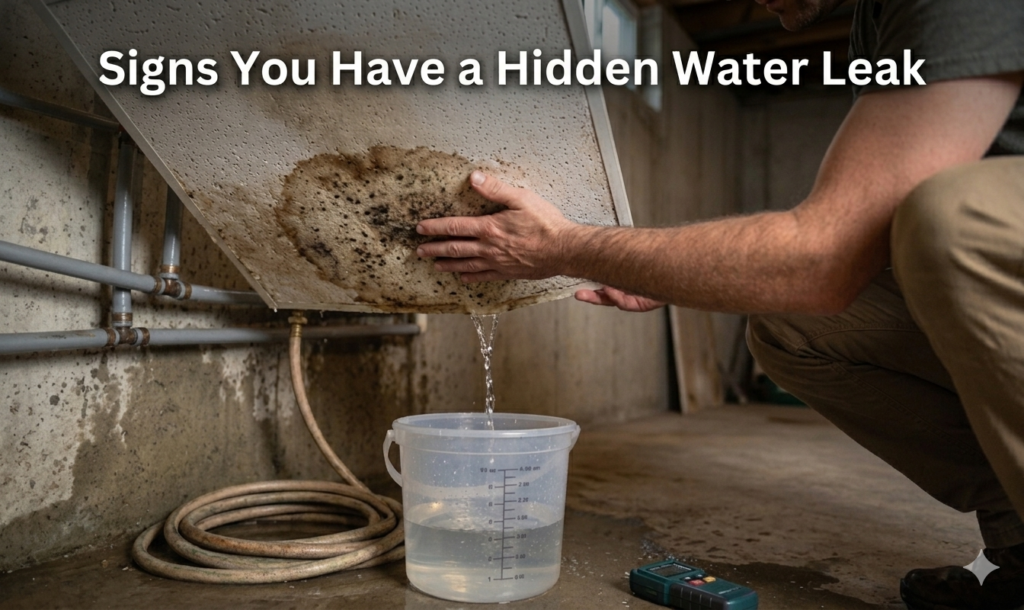
Visible water stains on ceilings, walls, or floors provide obvious signs you have a hidden water leak somewhere above or behind the affected surface. These stains typically appear as yellow, brown, or copper-colored discoloration often with darker edges, indicating water has saturated the material and deposited minerals as it dried. Ceiling stains usually suggest roof leaks or plumbing problems in the floor above, while wall stains can indicate leaking pipes within walls, roof issues, or problems with exterior water management.
The tricky aspect of water stains is that water travels along structural members, pipes, and other pathways before appearing at visible surfaces, meaning the stain location may be several feet from the actual leak source. Water leaking from a second-floor bathroom pipe might travel along joists and appear on a first-floor ceiling fifteen feet from the bathroom. Fresh, damp stains indicate active leaks requiring immediate attention, while old, dry stains might represent previously repaired problems or leaks that only occur under specific conditions like heavy rain or when certain fixtures are used. Never dismiss water stains as cosmetic issues, even if they appear dry, as they document that water reached building materials and likely compromised their integrity. Before painting over stains, ensure the underlying leak is completely resolved and affected materials have dried thoroughly, otherwise you’re simply hiding evidence of ongoing damage. Professional moisture meters can determine whether building materials behind stains retain elevated moisture levels indicating continued leaking.
Discovering unexpectedly wet, soft, or spongy areas on floors, walls, or ceilings represents serious signs you have a hidden water leak that has saturated building materials. Unlike surface condensation that dries quickly, wet spots from hidden leaks persist because water continues feeding them from the concealed source. Floors may feel soft when you walk across them, particularly near toilets, tubs, sinks, or appliances. Walls might feel damp to the touch or give slightly when pressed. Ceilings can sag or feel soft, indicating water accumulation above.
These physical changes occur because water saturates materials designed to remain dry, causing wood to swell and soften, drywall to lose structural integrity, and flooring to separate from subfloors. Bathroom floors that feel spongy near toilets often indicate wax ring failures allowing water to seep underneath with each flush, or supply line leaks that have rotted the subfloor. Kitchen floors with soft spots usually point to dishwasher leaks, sink supply line failures, or drain leaks that have compromised flooring materials. Carpet that remains damp without clear reasons or develops dark spots from moisture underneath suggests slab leaks in homes with concrete foundations or leaks in flooring from bathrooms above. Never ignore wet or soft building materials, as the damage worsens rapidly once saturation begins. Materials that have been wet for extended periods often require replacement even after the leak is fixed, as their structural integrity has been permanently compromised and mold has likely colonized them.
While not always immediately associated with plumbing issues, unexplained cracks in foundations, concrete slabs, or tile floors can be signs you have a hidden water leak beneath your home’s structure. Slab leaks, where water pipes running through or under concrete foundations develop leaks, create pressure that shifts soil and concrete, resulting in cracks. These leaks are particularly problematic because they’re completely invisible until damage becomes extensive, and repairs often require breaking through concrete to access failed pipes.
Foundation cracks that appear suddenly or grow rapidly, especially when accompanied by other indicators like increased water bills or damp spots on floors, suggest underground water is compromising your home’s structural support. In areas with expansive clay soils common in parts of Texas, Oklahoma, and other regions, water from leaks causes soil to expand and contract, creating pressure that cracks foundations. Tile floors that crack in patterns or where grout lines consistently fail may indicate subflooring movement from water damage below. Doors and windows that suddenly stick or won’t close properly can result from foundation shifting caused by water undermining support. Investigating foundation cracks promptly prevents small problems from becoming catastrophic structural failures requiring tens of thousands of dollars to repair. Professional leak detection companies use specialized equipment including ground-penetrating radar, acoustic sensors, and infrared cameras to locate slab leaks without destructive excavation, allowing targeted repairs that minimize damage and costs.
Experiencing inconsistent or mysteriously dropping water pressure often represents subtle signs you have a hidden water leak affecting your plumbing system’s overall performance. When pipes leak significantly, they divert water from intended fixtures, reducing available pressure throughout the system. This symptom can be particularly confusing because pressure changes might occur only at certain times or when specific fixtures operate, making the problem seem intermittent and difficult to diagnose.
Water pressure that decreases noticeably when no additional fixtures have been turned on suggests water is escaping somewhere between the supply and your faucets. The pressure drop occurs because your system is trying to supply water to both your fixtures and the leak location simultaneously, dividing available flow. In some cases, corrosion creating leaks also restricts pipes internally, further reducing pressure. Testing pressure at different locations throughout your home helps identify whether the problem affects the entire house or localizes to specific areas. Whole-house pressure problems might indicate main line leaks or municipal supply issues, while isolated pressure drops typically point to leaks in specific branch lines. A pressure gauge attached to an outdoor hose connection provides objective measurements you can track over time and share with plumbers investigating problems. Normal residential water pressure ranges between forty and sixty PSI, so readings consistently below this range warrant investigation especially if they represent recent changes from historical norms.
Finding unexplainably warm areas on floors, particularly on ground-level concrete slabs, can be surprising signs you have a hidden water leak specifically involving hot water lines running through or beneath your foundation. Hot water leaks create temperature differentials detectable on floor surfaces, often accompanied by unusually high water heating costs as your water heater runs constantly replacing escaped hot water. These warm spots typically feel noticeably different than surrounding floor areas and maintain consistent warmth even when heating systems aren’t running.
The most common locations for warm floor spots are near water heaters, along paths where hot water pipes run to bathrooms and kitchens, and in areas where pipes might have shifted or been damaged during construction or landscaping. In addition to warmth, you might notice your water heater cycling more frequently than usual or running out of hot water faster than it should given your household’s usage patterns. Some homeowners report actually feeling warm air rising from floor vents or registers near leak locations as escaping hot water creates steam. The energy waste from hot water leaks is substantial, as you’re paying to heat water that never reaches intended fixtures, and the constant heating cycling can shorten water heater lifespan. Infrared thermometers available at hardware stores for thirty to fifty dollars help you map floor temperature variations and identify specific warm areas for plumbers to investigate. Thermal imaging cameras provide even more detailed heat mapping but typically require professional equipment and interpretation.
Outdoor signs you have a hidden water leak include unusually green, lush patches of grass in otherwise uniform lawns, persistently soggy areas of yard that never fully dry, or vegetation growing more vigorously in specific spots without explanation. These symptoms indicate underground water main or service line leaks irrigating soil and plants with your treated, paid-for water that should be flowing to your home. The extra moisture and nutrients from water treatment create ideal growing conditions resulting in noticeably different grass appearance.
The challenge with underground leaks is they can persist for months before creating obvious damage, wasting thousands of gallons and potentially undermining foundations, driveways, or sidewalks as escaped water erodes soil. Look for unexplained puddles that appear when it hasn’t rained, especially if they persist in the same locations. Sinkholes or depressions in lawns sometimes indicate subsurface water erosion from leaks. The sound of running water when you’re outside near water meter locations or along the path water lines run from the street to your home can confirm suspicions. Testing for underground leaks involves turning off all indoor water use and checking whether your water meter continues registering flow, indicating water escapes somewhere between the meter and your home. Many municipalities hold homeowners responsible for leaks on the property side of water meters, making detection and repair your financial responsibility. Professional leak detection for underground lines often uses acoustic equipment listening for the sound of water escaping under pressure, or tracer gas injected into pipes then detected where it escapes from leak points.
Noticing increased indoor humidity, persistent condensation on windows, or generally damp feeling air can be subtle signs you have a hidden water leak adding moisture to your home environment. While some condensation during cold weather is normal, excessive moisture that appears year-round or in unusual amounts suggests water is evaporating from leak locations into your air. This excess humidity creates uncomfortable conditions, encourages mold growth, and can damage wood floors, furniture, and other moisture-sensitive materials.
Humidity levels in homes should typically range between thirty and fifty percent for comfort and health, with lower levels in winter and slightly higher in summer. Inexpensive hygrometers available for ten to twenty dollars measure indoor humidity, helping you determine if levels exceed normal ranges. Bathrooms and kitchens naturally have higher humidity from normal use, but bedrooms, living rooms, and other spaces shouldn’t feel damp or show persistent condensation. Windows that fog or develop condensation on inside surfaces when outdoor temperatures drop might simply indicate poor window insulation, but when accompanied by other leak indicators, they suggest excess indoor moisture from hidden water sources. Basements and crawl spaces with high humidity often have both groundwater intrusion and plumbing leaks contributing to dampness. Dehumidifiers treat symptoms by removing moisture from air but don’t address underlying leak sources, so using them successfully to reduce humidity confirms excess moisture exists but doesn’t eliminate the need to find and fix the actual leak.
Perform a water meter test by turning off all water use in your home, noting the meter reading, waiting one to two hours without using any water, then checking if the meter has moved. Any movement indicates water is flowing somewhere, confirming a leak. This simple test provides definitive evidence even when other signs are ambiguous.
First, turn off the main water supply if you can locate the leak source or if damage appears active and worsening. Document the damage with photos for insurance purposes. Contact a licensed plumber for professional leak detection and repair. Move valuable items away from affected areas and begin drying visible moisture to prevent mold growth.
Professional leak detection services typically range from two hundred to five hundred dollars depending on detection methods required, home size, and leak location difficulty. This cost is separate from actual repair expenses. While it seems expensive, professional detection prevents far more costly exploratory damage and ensures accurate leak location before repairs begin.
Small leaks absolutely cause serious damage over time. Even slow drips waste thousands of gallons annually and create ideal conditions for mold growth, wood rot, and structural deterioration. Water damage repair from long-term small leaks frequently costs five thousand to twenty thousand dollars, far exceeding the waste of the water itself.
Yes, basic tools include moisture meters detecting dampness in walls and floors, infrared thermometers identifying temperature variations from hot water leaks, and acoustic listening devices amplifying the sound of water movement. These tools cost fifty to two hundred dollars and help locate general leak areas, though professional equipment provides more precise detection for difficult cases.
Recognizing the signs you have a hidden water leak empowers you to protect your home from one of the most common and potentially devastating problems homeowners face. Unlike obvious plumbing failures that announce themselves through visible water and immediate damage, hidden leaks operate silently while undermining building materials, encouraging mold growth, and steadily increasing utility costs. The warning indicators outlined in this guide provide early detection opportunities when problems remain manageable and repairs cost hundreds rather than thousands of dollars.
The key to minimizing damage from hidden leaks is maintaining awareness of your home’s normal conditions and immediately investigating any changes that might indicate water where it shouldn’t be. Unexplained water bill increases, mysterious water sounds, musty odors, or any of the other signs discussed should trigger systematic investigation rather than being dismissed as minor anomalies. The earlier you detect and address hidden leaks, the less damage they cause and the lower your repair costs. Many homeowners ignore subtle warning signs because they seem minor or hope problems will resolve themselves, only to face catastrophic damage requiring extensive remediation when leaks finally become obvious.
Beyond responding to warning signs, preventive measures including regular plumbing inspections, monitoring water bills for unusual changes, and addressing small visible leaks promptly help prevent hidden problems from developing. Understanding that plumbing systems age and components fail over time prepares you mentally and financially for eventual repairs rather than being shocked when problems emerge. The combination of awareness about signs you have a hidden water leak and proactive maintenance creates the best defense against one of homeownership’s most expensive and stressful challenges. When in doubt, consulting professional plumbers with leak detection equipment provides peace of mind and prevents minor concerns from escalating into major disasters.